
The History of Winter Coats: 8 Iconic Silhouettes Explained

Image Source: Left - Sea | Right - Keem Studio via Complex
Winter clothing didn’t start on runways. It began in places where the cold could humble you in minutes. Every coat we wear today descends from a silhouette born of necessity—engineered by communities who learned to read their landscape and stitch knowledge into something you could survive in.
Some coats were made for riding across frozen plains.
Some for fishing in storms.
Some for mountain winds that never warmed.
Some for city winters that demanded armor.
These silhouettes traveled. They absorbed migration, trade, ritual, and weather across generations. The modern versions may look fresh, but the bones are ancient. Beneath every toggle, hem, and hood is a story about how humans learned to survive winter—and keep a little beauty with us while doing it. Below are the eight silhouettes featured in our series, along with modern interpretations.
All modern images used here are contemporary interpretations of each silhouette. Sources and product links are listed beneath each section and when hovering over image.

Image sources: left - Isaora | Right - Canada Goose
1. Parka
Origin: Inuit (Arctic regions)
Era: At least 1000 BCE
The parka isn’t fashion—it’s survival. Inuit communities engineered warmth from caribou hide, seal gut, and the kind of cold that could snap lesser materials in half. Everything had purpose: fur ruffs that blocked ice fog, long hems that trapped heat, insulated cores built from anatomical knowledge and lived experience.
Modern parkas keep the silhouette but swap traditional materials for high-tech insulation. Warmth made functional, not fancy.
Shop the Silhouette:
Image sources: left - Isaora | Right - Canada Goose

2. Duffle Coat
Origin: Duffel, Belgium → adopted across Britain
Era: 15th century fabric; iconic by the late 1800s with the British Navy
The duffle coat feels like something drafted on a shipyard table. Thick, napped wool. Toggle closures you can fasten with cold fingers. A hood built for Atlantic spray. It’s utilitarian, democratic, and unfussy—a garment made to work first and charm second.
Shop the Silhouette:
Image sources: left - Gloverall | Right - Atorie
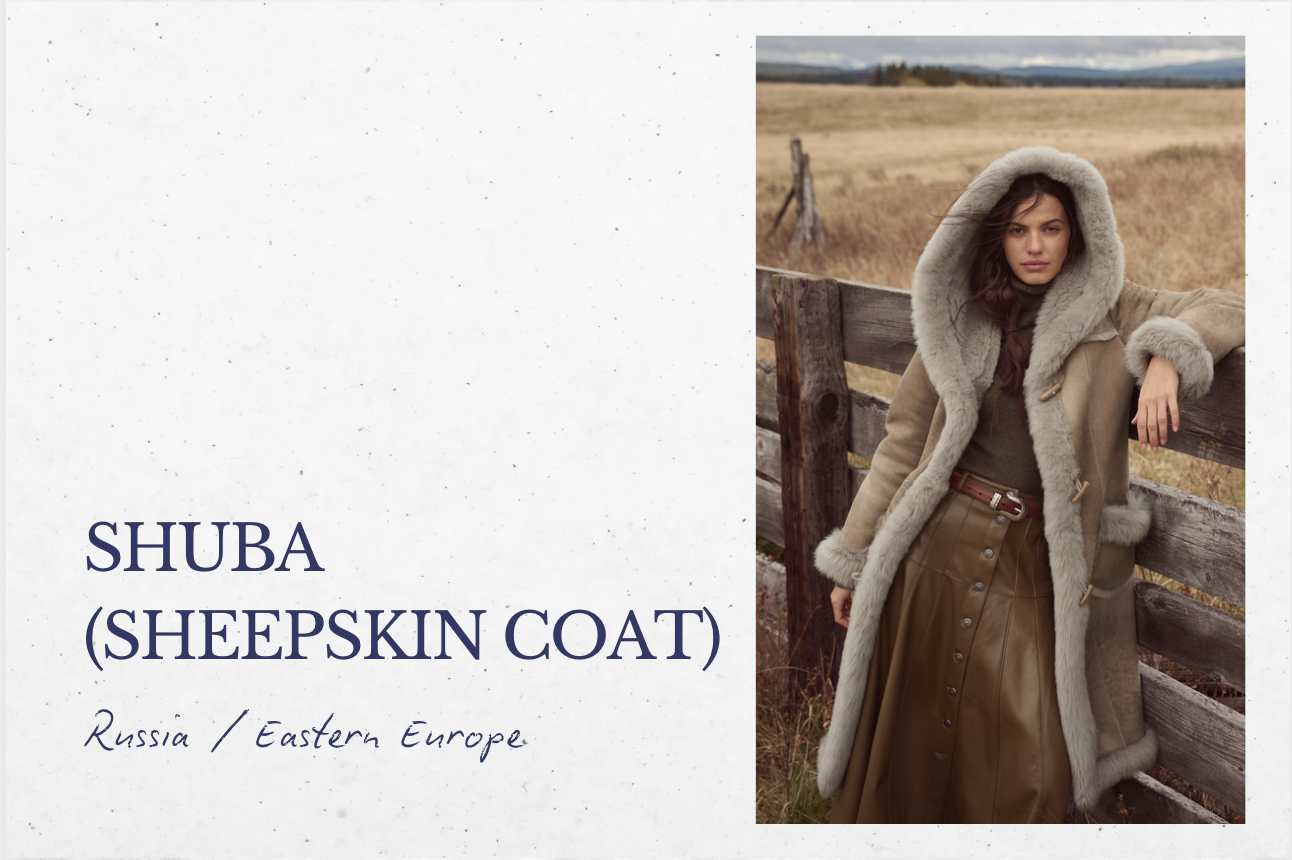
Image Source: Overland
3. Shuba (Sheepskin Coat)
Origin: Russia / Eastern Europe
Era: Medieval period; widespread by 1600s
The shuba is what you wear when winter stops being weather and becomes an element. Heavy sheepskin. Long hems. A weight that anchors you to the earth. In Siberian and Slavic communities, a shuba wasn’t fashion—it was a lifeline.
Modern shearling coats echo the softness but keep that old-world gravity.
Shop the Silhouette:
Image Source: Overland
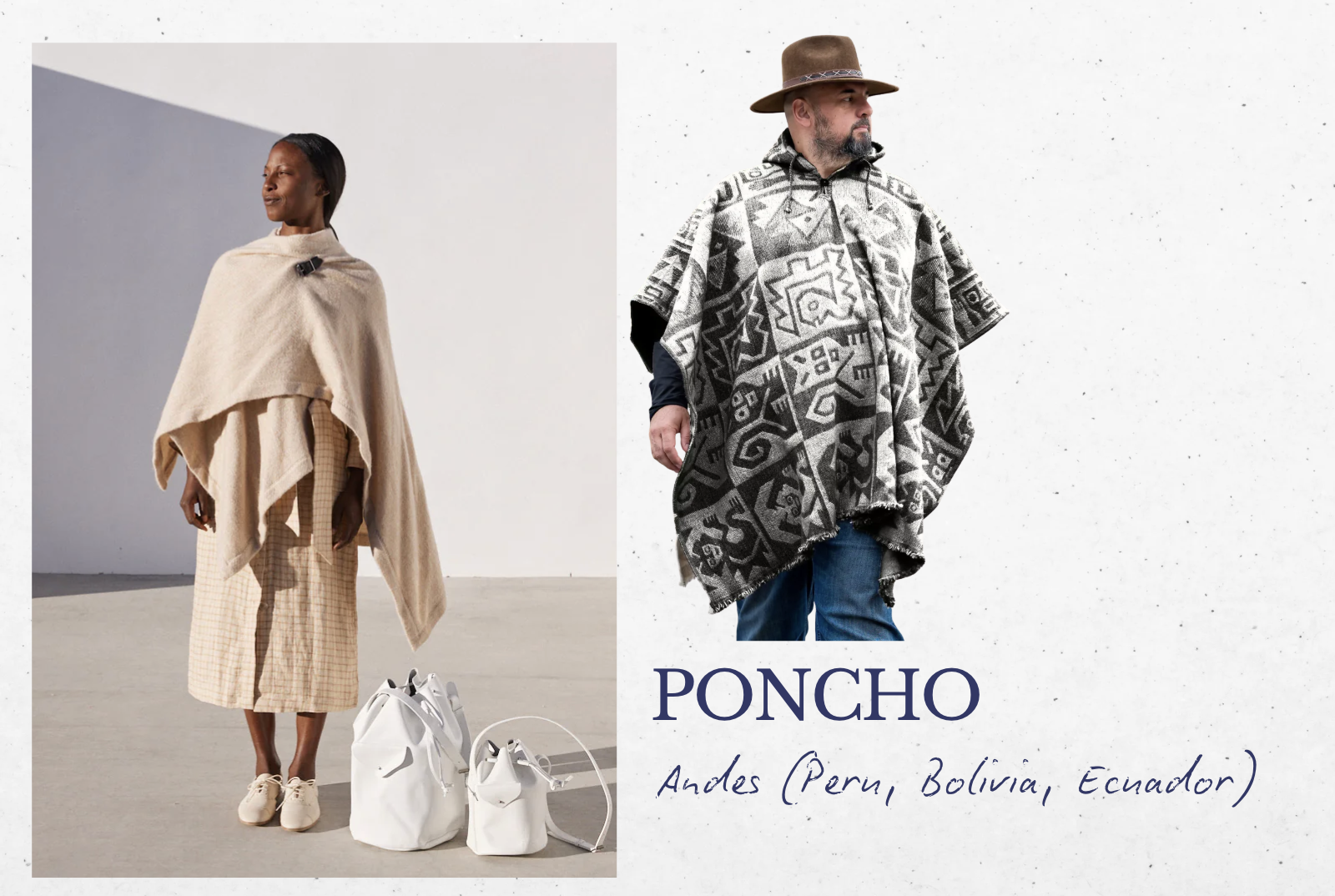
Image source: Left - Mojave Desert Skin Shield | Right - Ecualama
4. Poncho
Origin: Indigenous Andean cultures (Peru, Bolivia, Ecuador)
Era: Over 2,000 years old
The poncho is functional architecture: one piece of fabric engineered for altitude, wind, and cold. Woven tight from llama or alpaca fiber, dyed with mineral pigments pulled straight from the Andes, patterned with symbols tied to community and place.
Today’s versions range from minimalist drapes to richly patterned heritage designs—but the logic remains the same: one garment, infinite utility.
Shop the Silhouette:
Image source: Left - Mojave Desert Skin Shield | Right - Ecualama
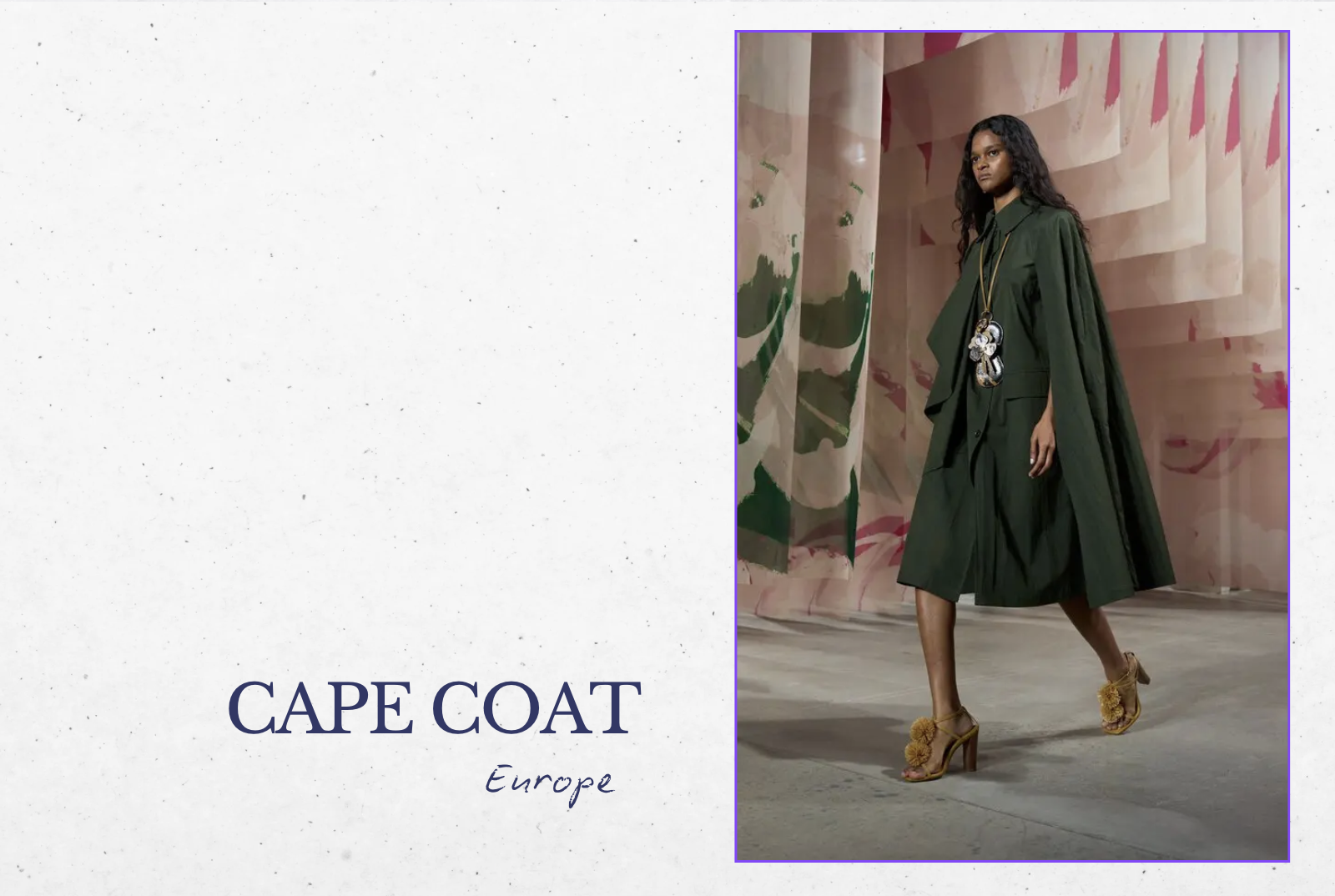
Image source: Ulla Johnson via Editorialist
5. Cape Coat
Origin: Medieval Europe
Era: 1100s onward (carried into Renaissance → modern couture)
The cape coat is drama with discipline. Medieval riders wore capes to cut rain. Later generations sharpened the silhouette into something sculptural. Those side slits for arms? A simple solution for moving freely while staying covered.
Today’s cape coats feel architectural and modern, but you can still sense that traveling-through-the-forest ancestry in the hemline.
Shop the Silhouette:
Image source: Ulla Johnson via Editorialist

Image source: Right - Andrews Co.
6. Shearling / Sheepskin Coat
Origin: Central Asian pastoral cultures
Era: At least 2,000 years old
Before shearling was a luxury fashion staple, it lived on the steppes. Riders and herders relied on wool inside, hide outside—nature’s earliest insulation system. A coat built for movement, cold, and long distances.
Modern silhouettes reinterpret the logic for global fashion: softer lines, varied cuts, same ancestral warmth.
Shop the Silhouette:
Image source: Right - Andrews Co.

Image source: Eddie Bauer
7. Puffer Jacket
Origin: United States (Eddie Bauer) / Europe
Era: 1936
The puffer jacket began as a technical solution, not a trend. Eddie Bauer nearly died of hypothermia while fishing and engineered his way out of the problem—stitching goose down into quilted channels that kept heat from escaping.
Mountaineers wore it first.
Cities adopted it next.
Now it’s survival tech disguised as softness.
Shop the Silhouette:
Image source: Eddie Bauer
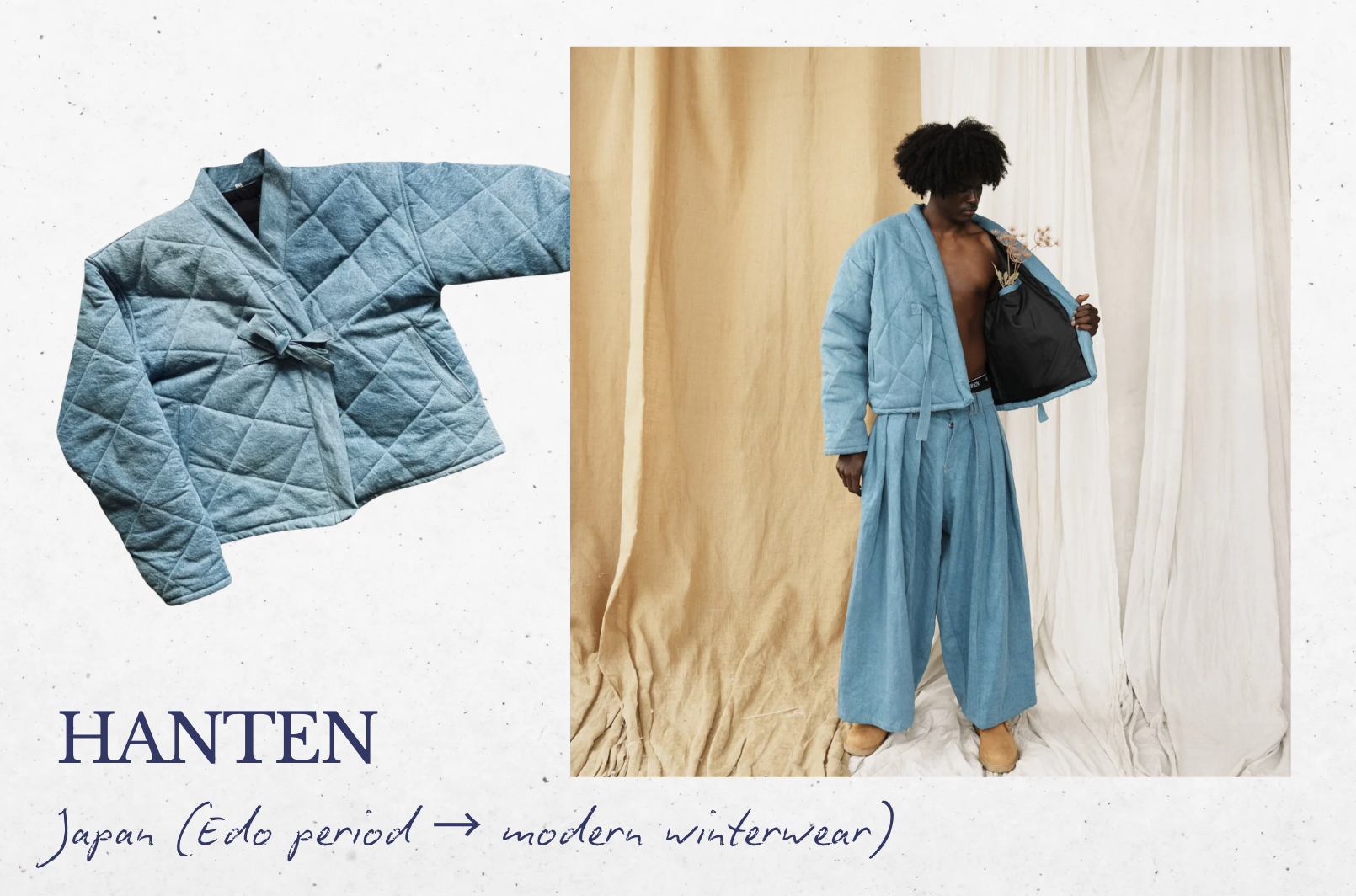
Image source: Keem Studios via Complex
8. Hanten
Origin: Edo-period Japan
Era: 1600s onward
The hanten is winter warmth written in cotton and batting. Made for work, chores, and cold nights, stitched at home with layers of oshima wadding—one of Japan’s earliest insulated garments.
Modern designers echo the same logic: quilted panels, soft structure, easy movement. Whether in denim or down, the silhouette stays quietly timeless.
Shop the Silhouette:
Image source: Keem Studios via Complex
Note on Images
Photos in this article show modern interpretations of historical silhouettes. Full credits + garment links are provided on each section.
